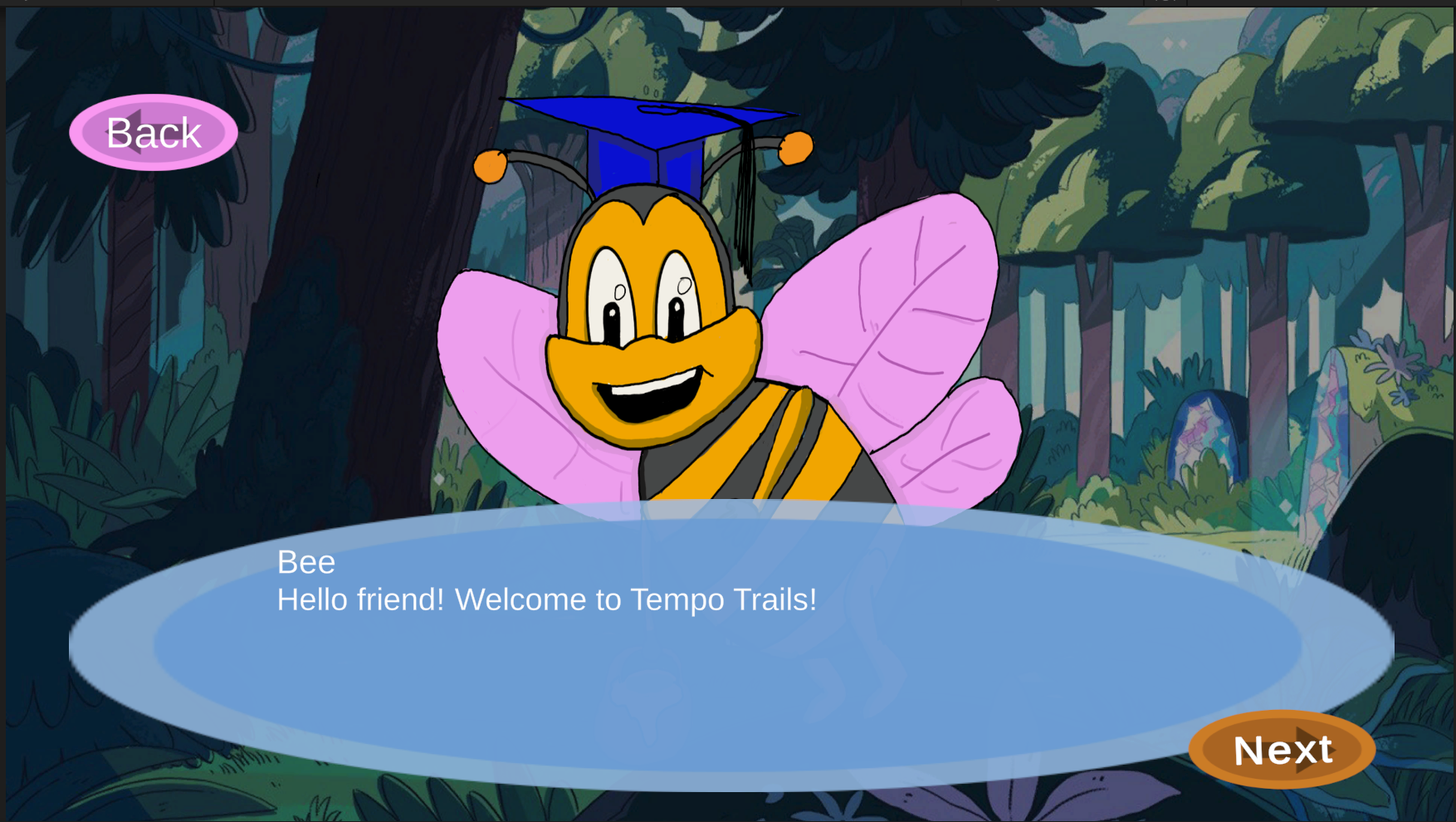
// CASE STUDY — UNITY GAME · CAPSTONE PROJECT
A rhythm-based Unity game designed with autistic children in mind — built around accessibility-first principles, real-time audio feedback, and inclusive interaction design. Developed with a team of 4+ as a capstone project and tested with real users aged 5-8.
Play on itch.io
// 01 — The Challenge
Designing a rhythm game for neurotypical players is already challenging — timing, audio feedback, and visual clarity all have to work in concert. Designing one for autistic children adds layers of complexity that most game design frameworks don't address. Sensory sensitivities, different processing speeds, and the need for clear predictable feedback patterns all had to be considered from the very first design decision, not retrofitted at the end.
// How do you make a rhythm game feel rewarding rather than overwhelming for players with sensory sensitivities?
// 02 — Design Approach
The core design philosophy was that accessibility constraints are design constraints — and good design constraints produce better games for everyone. Every decision about audio feedback, visual timing, and UI clarity was made with our target users at the center rather than adapted for them afterward.
Real-time system feedback was designed to be immediate and legible — players needed to understand what was happening and why without reading instructions or processing complex information. The rhythm mechanics were built around positive reinforcement rather than failure states, reducing anxiety and keeping players engaged.
Software design principles DRY and KISS were applied throughout the codebase — not just for technical cleanliness but because maintainable modular systems allowed the team to iterate on accessibility features quickly without breaking existing functionality.
// 03 — User Research & Testing
Tempo Trails was tested with children aged 5 to 8 — our actual target users. Watching children interact with the game in real time revealed friction points no amount of internal review would have caught. Children don't mask confusion the way adults do — if something doesn't make sense they simply stop engaging. That immediate honest feedback drove every major design iteration.
// Observed
UI Navigation Patterns
// Observed
Audio Feedback Response
// Observed
Engagement Over Time
// Observed
Friction Points
Each observation session directly informed design changes — from adjusting audio feedback intensity to simplifying visual cues that were causing cognitive overload. The testing process made the game meaningfully better for every player, not just those with accessibility needs.
// 04 — What We Built
Tempo Trails is a rhythm-based Unity game featuring real-time audio interaction tightly coupled with visual feedback systems. The game was built with modular architecture separating audio logic, UI, and gameplay — making each system independently testable and iterable across a 4+ person team working under capstone deadline pressure.
// Feature
Real-Time Audio Feedback
// Feature
Accessibility-First UI
// Feature
Modular Architecture
// Feature
Positive Reinforcement
// Users Tested
Children Ages 5–8
// Result
Capstone Complete
// 05 — Outcome & Reflection
Designing Tempo Trails taught me that the best UX constraints come from the users who have the least margin for poor design. Autistic children don't tolerate confusing feedback, unclear affordances, or unpredictable systems — and honestly, neither should anyone else. The discipline of designing for this audience made every other design decision I've made since more intentional.
The modular system architecture we built also changed how I think about front-end development. Separating concerns — audio logic, UI state, gameplay rules — isn't just good engineering. It's good design thinking applied to code. Those principles show up in everything I build now, from component libraries to API design.